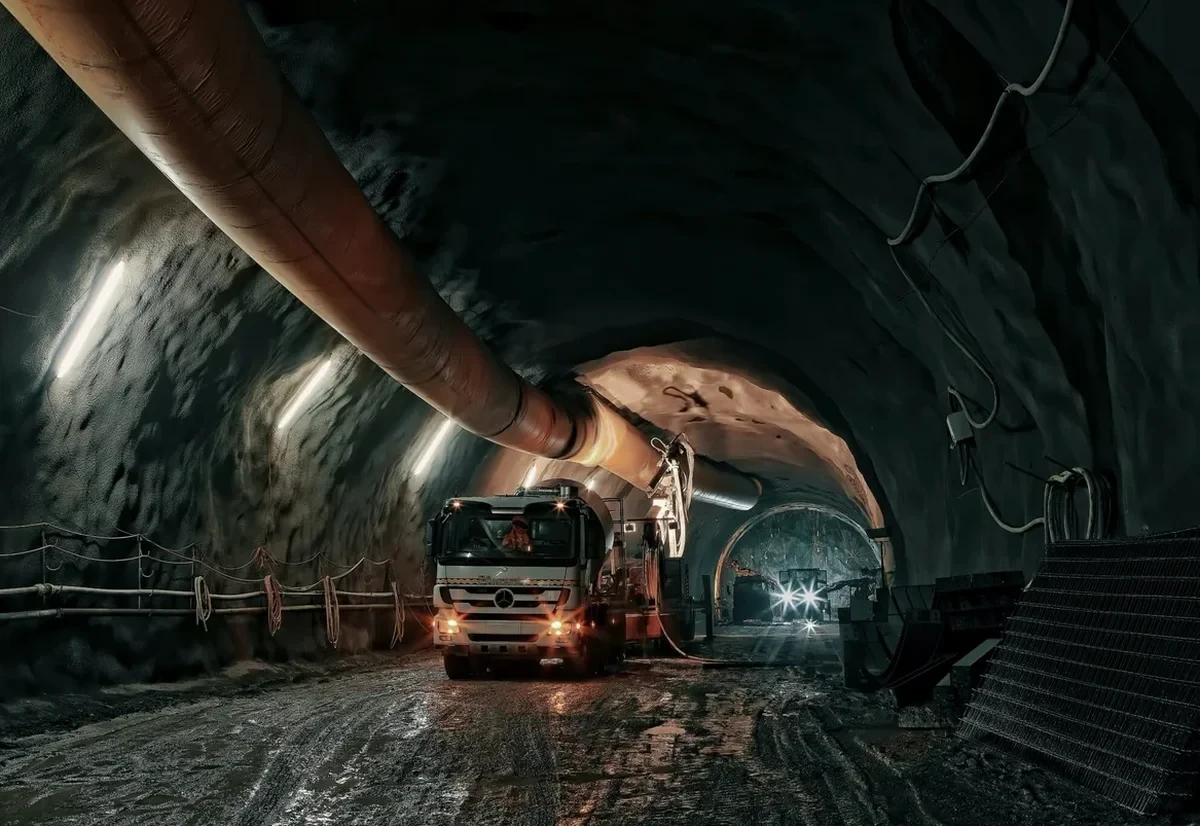
A tunnel boring machine hit a pocket of saturated fines at 12 metres depth just west of the escarpment a few years back, and the face sloughed within seconds. That job reshaped how we approach soft ground in the Illawarra. Wollongong sits on a narrow coastal plain pinned between the Tasman Sea and the steep Illawarra Escarpment, and that geography creates a layered mess of colluvium, residual soils, and ancient alluvial deposits. Groundwater is always part of the conversation here. When the client needs a drive under existing infrastructure or a cut-and-cover box in compressible silts, we run a phased investigation starting with test pits to expose the upper profile, then push deeper with CPT soundings that give us continuous tip resistance and pore pressure data through the soft bands. No two kilometres of alignment in Wollongong behave the same way, and that reality drives every sampling plan we write.
In Wollongong's coastal sediments, undrained shear strength below 25 kPa is common in the upper alluvium, and that changes every assumption about face stability.
Site-specific factors
The 2017 flood event in Wollongong saw over 230 mm of rain in 24 hours, pushing groundwater levels up three metres across the coastal plain. That kind of transient pressure spike is exactly what triggers blowouts in tunnel faces through soft ground. When we skip the monitoring phase, what happens is pore pressure redistribution around the excavation, reducing effective stress in the heading to near zero. The Illawarra's colluvial soils also carry a legacy of slope creep; old landslide debris mantles much of the escarpment foot, and that material is notoriously unpredictable in stiffness and drainage character. Without a proper geotechnical baseline report built on AS 1726 and AS 4678, the contractor has no contractual shield when conditions deviate from the geotechnical baseline. We have also seen sulphate attack on shotcrete linings in marine-estuarine clays near Port Kembla, a chemical risk that only shows up in laboratory analysis of groundwater and soil aggressivity. For deep excavation support adjacent to existing structures, the excavation monitoring program becomes the early warning system that keeps settlements within tolerance.
Quick answers
What is the typical cost range for a geotechnical analysis of a soft ground tunnel alignment in Wollongong?
For a comprehensive investigation covering boreholes, CPT, laboratory testing, and a geotechnical interpretative report along a typical tunnel alignment in the Wollongong area, budgets usually fall between AU$5,660 and AU$27,070. The spread depends heavily on access constraints, depth of the tunnel, number of borehole locations, and whether piezometer monitoring is required over multiple seasons. A short pedestrian underpass investigation sits at the lower end, while a TBM drive under the CBD with multiple cross passages pushes toward the upper range.
How do you handle boulders and colluvium in the geotechnical model for Wollongong tunnels?
The colluvium along the Illawarra Escarpment is a heterogeneous mix of basalt and sandstone boulders in a clay-silt matrix. Standard SPT refusal gives a false impression of bedrock if a boulder is hit. We run multiple closely spaced CPTs and supplement with seismic refraction to map the true rockhead. Boulder frequency and size distribution feed into a risk register that helps the contractor decide between open-face excavation with spiling versus a closed-face TBM.
What groundwater challenges are specific to soft ground tunnelling in the Wollongong coastal plain?
The coastal plain is underlain by estuarine and alluvial deposits with perched and semi-confined aquifers. High tides and heavy rainfall events cause rapid groundwater level changes. We install multi-level vibrating wire piezometers early and monitor through at least one wet season. The data feeds into transient seepage models that define the dewatering strategy and face support pressure envelope. Saline groundwater near Port Kembla also requires chemical testing for concrete durability design.