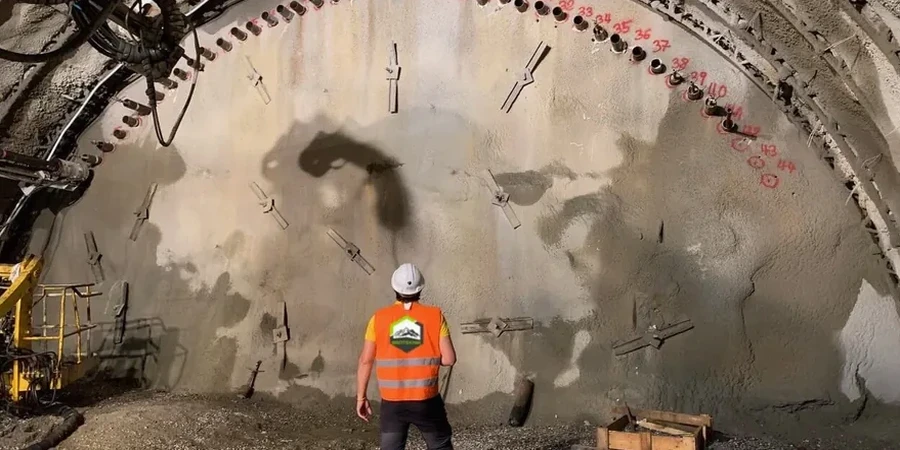
The Crown Street redevelopment project dug 14 meters down through mixed paleosol and colluvium, right next to a 1920s brick building whose footings sat on dense sand. Nobody predicted the lens of saturated silt that appeared at 9 meters. That kind of surprise is exactly what Wollongong's coastal plain geology delivers, and why monitoring isn't a checkbox item; it's the difference between a shoring wall that holds and one that deflects beyond tolerance. Our team deploys inclinometer arrays, piezometers, and automated total stations to track movement in real time, cross-referencing the data with the assumptions made during the slope stability analysis that informed the original excavation design.
You can't manage what you don't measure. In Wollongong's mixed ground, a 3 mm shift in a week matters more than a 10 mm shift over six months.
Site-specific factors
The geotechnical contrast between North Wollongong's dune sand country and the Keiraville slopes couldn't be starker. North of the city, excavations encounter clean, poorly graded sands that drain fast but collapse easily under vibration; pore pressure drops can trigger sudden face instability before anyone notices a crack at ground level. Up against Mount Keira, you're dealing with residual clayey silts that hold a cut face beautifully for days, then fail without warning when moisture content crosses the plastic limit after a single rain event. The real danger is assuming uniform behavior across the site. We've seen projects where the north corner behaves like a drained sand while the south corner acts like an undrained clay; a single monitoring approach applied to both zones misses the mechanism that actually causes the problem. This is why our monitoring plans always distinguish between at least two geotechnical domains, with separate trigger levels and response protocols for each.
Quick answers
What does geotechnical excavation monitoring typically cost for a Wollongong project?
For a standard basement excavation in the Wollongong area, monitoring programs generally range from AU$1,290 for a short-term, single-parameter setup to around AU$4,200 for a comprehensive package spanning several months with automated data acquisition, multiple inclinometer casings, piezometers, and vibration sensors. The final figure depends on the number of monitoring points, the required reading frequency, and whether we're tracking settlement on adjacent structures.
How are monitoring trigger levels determined for Wollongong's variable ground?
Trigger levels are set during the design phase using the geotechnical model specific to the site. We review the predicted wall deflections and ground settlements from the shoring design, then apply a factor that reflects the sensitivity of adjacent assets; a heritage masonry wall gets a tighter threshold than a modern steel-frame shed. These levels are reviewed after the first week of excavation data comes in and adjusted if the actual ground behavior differs from the model.
What happens when a monitoring reading exceeds the trigger level?
The response depends on the type and magnitude of exceedance. An amber trigger, typically 80% of the design limit, prompts increased reading frequency and a review by the geotechnical engineer. A red trigger, at 100% of the design limit, usually means work stops in that zone while the team assesses the cause; this might involve checking the shoring design against the actual ground conditions encountered, or investigating whether dewatering has caused unexpected consolidation in an adjacent layer.
Do you monitor groundwater levels during excavation in Wollongong?
Yes, groundwater monitoring is standard in our programs. Many Wollongong excavations encounter perched water tables in the colluvial layers or true groundwater in the coastal sand deposits. We install standpipe or vibrating wire piezometers to track pore pressure changes during dewatering, because a rapid drop in the water table can induce settlement in compressible layers well beyond the excavation footprint.