← Home · Roadway

Rigid Pavement Design in Wollongong

Together, we solve the challenges of tomorrow.

LEARN MORE →

Salt-laden winds off the Tasman Sea and a history of coal mine subsidence shape every pavement project in Wollongong. Rigid pavement design here is not just about concrete strength. It demands a granular understanding of local geology, from the Hawkesbury Sandstone ridges to the coastal plain's soft alluvium. Our team tackles this directly. We specify slab thickness, reinforcement, and jointing based on in-situ ground data, not desktop assumptions. Whether the site sits on Bulli Clay or compacted fill near the escarpment, the pavement structure must resist curling, pumping, and long-term erosion beneath the slab. A CPT test often reveals soft lenses that standard boreholes miss, and we integrate those findings into the structural model before a single cubic metre of concrete is poured.

A concrete slab is only as good as the subgrade it rests on—skip the ground investigation and you inherit a maintenance liability for decades.

How we work

Wollongong's population has pushed past 220,000, driving demand for heavy-duty pavements at distribution centres and port-side logistics hubs. A rigid pavement design must handle static rack loads exceeding 10 tonnes per leg, repeated forklift traffic, and the thermal gradient common to coastal New South Wales. We model slab-on-grade using Westergaard theory, adjusted for a k-value derived from site-specific plate load tests. Joint spacing is calculated to control mid-panel cracking without creating excessive maintenance. For container yards with continuous operation, we often recommend dowelled contraction joints and a lean-mix concrete subbase over a cement-stabilised layer. Early-age saw cutting timing is critical here; the Illawarra's humidity can delay concrete set, so we monitor maturity with in-situ sensors. Every design includes a drainage plan that prevents water from ponding at slab edges. This ties back to the subgrade preparation verified through in-situ permeability testing on site.
Rigid Pavement Design in Wollongong
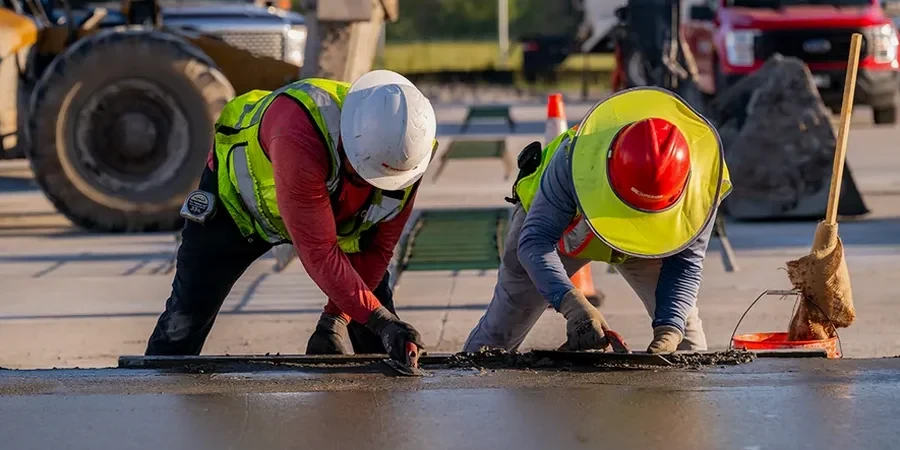
Technical reference image — Wollongong

Site-specific factors

The most common mistake we see in Wollongong is a contractor placing a rigid pavement on uncontrolled fill without any verification of compaction. The slab looks fine for six months. Then a container handler passes over the edge, the fill settles, and a corner crack propagates across three panels. Repair means cutting out and replacing concrete in an active warehouse. Another frequent failure is ignoring the sulphate content in local soils. Some pockets of fill sourced from old mine spoil contain reactive minerals that attack the cement paste over time. We always specify a sulphate-resistant cement blend when the soil chemistry demands it. And in areas near the escarpment, differential heave from reactive clay can lift slabs by 15 mm seasonally. Our design accounts for that movement.

Need a geotechnical assessment?

Reply within 24h.

Email: contact@geotechnicalengineering1.co

Reference parameters

ParameterTypical value
Design methodWestergaard / Finite Element (EverFE, ISLAB2000)
Concrete flexural strength (28-day)4.5 - 5.0 MPa (characteristic)
Modulus of subgrade reaction (k)Determined by plate load test (AS 1726)
Joint typeDowelled contraction / tied construction / isolation
Subbase materialLean-mix concrete or cement-stabilised granular (min 150 mm)
Load classificationT44 / S44 (Austroads) or client-specific axle loads
Design life30-50 years for industrial terminals

Associated technical services

01

Slab-on-grade design

Thickness, reinforcement, and joint layout for warehouses, cold stores, and manufacturing plants. Load cases include racking, forklifts, and thermal effects.

02

Container yard pavements

Heavy-duty rigid pavements for straddle carriers and reach stackers. Includes corner protection, drainage, and staged construction sequencing.

03

Subgrade evaluation and improvement

Plate load tests, CBR, and permeability testing to determine the modulus of subgrade reaction. Recommendations for lime stabilisation or geogrid reinforcement where needed.

Applicable standards

AS 1726:2017 Geotechnical site investigations, AS 4678:2002 Earth-retaining structures (for loading and backfill), AS/NZS 1170.1:2002 Structural design actions, Austroads Guide to Pavement Technology Part 2: Pavement Structural Design, Cement Concrete & Aggregates Australia (CCAA) T48: Guide to Industrial Floors and Pavements

Quick answers

What is the typical cost for a rigid pavement design in Wollongong?

Fees for a full design package, including geotechnical investigation, structural analysis, and construction drawings, range from AU$2,920 to AU$10,600. The final figure depends on the slab area, the number of load cases, and whether we need to coordinate with existing underground services.

How long does the design process take?

A standard industrial slab design takes two to three weeks from the completion of field testing. More complex projects with phased construction or heavy dynamic loads may require four to five weeks.

Do you need to test the ground before starting the design?

Yes, absolutely. We must know the soil profile to a depth of at least two metres below the proposed subgrade level. Plate load tests and laboratory classification tests are essential inputs for the Westergaard model.

Can you design pavements for automatic guided vehicles (AGVs) and narrow-aisle trucks?

Yes. AGVs impose very tight flatness and levelness tolerances, often FF50/FL35 or better. We specify laser-guided screeding and joint detailing that prevents differential movement at the wheel paths.
Location and service area

We serve projects in Wollongong and surrounding areas.

View larger map