← Home · Geophysics

MASW and VS30 Shear Wave Velocity Testing in Wollongong

Together, we solve the challenges of tomorrow.

LEARN MORE →

When AS 1170.4-2007 calls for a site-specific shear wave velocity profile, particularly for projects on the complex soils between the Illawarra escarpment and the Tasman Sea, surface-based MASW provides a non-invasive path to compliance. The Wollongong basin, shaped by the Nepean Fault and underlain by interbedded coal measures and Quaternary alluvium, rarely fits neatly into the default Site Class assumptions. A direct VS30 measurement replaces conservative estimates with verifiable data, which often translates to more efficient foundation designs and reduced structural bracing requirements. Our team runs a 24-channel seismograph with 4.5 Hz geophones, processing dispersion curves through forward modelling to extract a ground-truth velocity model that the city’s certifiers and geotechnical reviewers expect to see in the site investigation report.

A measured VS30 of 220 m/s in central Wollongong can push a site from Site Class D to C, directly reducing the seismic design category and saving on structural costs.

How we work

The seismic response of a site in North Wollongong perched on Hawkesbury Sandstone bears little resemblance to a site near Port Kembla sitting atop deep estuarine clays and reclaimed sands, and the VS30 values can swing from over 500 m/s to under 180 m/s within a few kilometres. Our testing captures these contrasts explicitly. We deploy linear arrays of 48 to 92 metres, recording surface waves generated by a 10 kg sledgehammer source, then invert the fundamental-mode dispersion curve to resolve velocity layering down to 30 metres. For deeper investigations, such as those required for seismic microzonation studies in the Wollongong CBD, we extend the array and supplement the survey with passive-source recordings using ambient noise. The output integrates directly into the Site Class table of AS 1170.4, and we routinely deliver contour maps of VS30 across large subdivisions where spatial variability is a concern for the structural engineer.
MASW and VS30 Shear Wave Velocity Testing in Wollongong
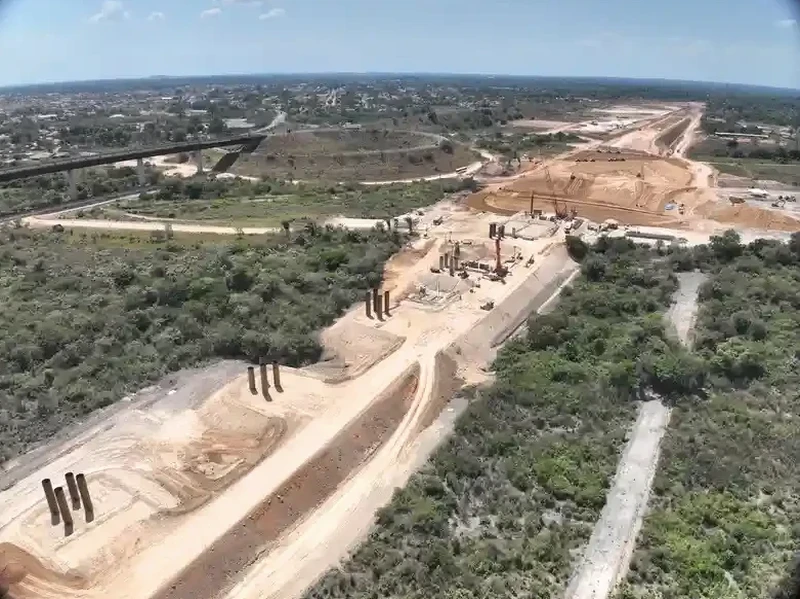
Technical reference image — Wollongong

Site-specific factors

One pattern we see repeatedly in Wollongong is the over-reliance on SPT N-values alone to estimate shear wave velocity via empirical correlations that were never calibrated for Illawarra geology. The Permian coal measures that underlie much of the city introduce thin high-velocity stringers that a borehole log can miss entirely, while the MASW dispersion curve averages them correctly over the array length. A second pitfall is conducting a survey without first checking for underground services along the line—hitting a buried high-voltage conduit or gas main is a real risk in the older suburbs like Fairy Meadow where as-built records are patchy. We always engage a certified locator and run a trial shot before committing to the full spread.

Need a geotechnical assessment?

Reply within 24h.

Email: contact@geotechnicalengineering1.co

Reference parameters

ParameterTypical value
MethodMASW (active + passive combined)
Measured ParameterShear wave velocity (Vs) vs. depth
Depth of Investigation30 m standard (extendable to 60 m)
Array Length48 to 92 m (active), 100+ m (passive)
Geophone Type4.5 Hz vertical-component, 24-channel
Source10 kg sledgehammer on aluminium plate
Key OutputVS30 value, Vs profile, Site Class per AS 1170.4
Reporting StandardAS 1726-2017 geotechnical data format

Associated technical services

01

MASW / VS30 Profiling

Active and passive surface wave testing to determine shear wave velocity down to 30 metres for Site Class determination under AS 1170.4. Includes fundamental-mode dispersion analysis and 1D Vs inversion.

02

Seismic Refraction Tomography

P-wave refraction surveys for mapping bedrock depth and rippability across the escarpment foothills. Useful for identifying paleochannels in the coastal plain where fill thickness varies abruptly.

03

Downhole Seismic Testing

Borehole-based Vs measurement for projects where surface access is restricted. We lower a triaxial geophone into a cased borehole and record direct arrivals at 1-metre intervals, providing a ground-truth tie for surface methods.

04

Seismic Microzonation Studies

Site-specific ground response analysis for subdivisions and infrastructure corridors. Combines MASW, microtremor HVSR, and borehole data to produce VS30 contour maps and amplification spectra for council submission.

Applicable standards

AS 1170.4-2007 Structural design actions – Earthquake actions in Australia, AS 1726-2017 Geotechnical site investigations, AS/NZS 1170.0:2002 Structural design actions – General principles, National Construction Code (NCC) 2022, Section B1

Quick answers

What does a MASW survey in Wollongong typically cost?

For a standard active-source MASW line with 24 geophones processed to a VS30 value and Site Class determination, budgets in the Wollongong region generally fall between AU$2,600 and AU$5,280 depending on array length, number of lines, and whether passive-source recording is added for deeper coverage.

How does the Illawarra escarpment geology affect VS30 results?

The escarpment introduces shallow bedrock (Hawkesbury Sandstone and Narrabeen Group) with Vs values often exceeding 760 m/s within the top 30 metres, pushing sites into Site Class B. However, colluvial aprons and talus slopes at the base of the escarpment can produce sharp lateral velocity contrasts that a single measurement point will not capture, so we typically recommend two to three parallel lines to characterise the transition.

Is MASW accepted by Wollongong City Council for DA submission?

Yes. MASW-derived VS30 profiles are routinely accepted as part of the geotechnical investigation package for Development Applications, provided the survey is conducted and reported in accordance with the AS 1726 data format and the Vs interpretation is reviewed by a chartered geotechnical engineer.

Can you run a MASW line on a constrained suburban block in suburbs like Corrimal or Figtree?

We can. For tight sites where a full 48-metre linear spread is not possible, we use a shorter array with reduced depth penetration or adopt a passive-source recording approach using ambient noise and the spatial autocorrelation (SPAC) method, which requires less linear space while still resolving velocity to 30 metres.
Location and service area

We serve projects in Wollongong and surrounding areas. More info.

View larger map