← Home · Foundations

Pile Foundation Design in Wollongong: Geotechnical Data for Deep Foundations

Together, we solve the challenges of tomorrow.

LEARN MORE →

The Illawarra Escarpment defines Wollongong's subsurface. Coastal terrace deposits along the Corrimal and Figtree corridors give way to residual siltstone and sandstone at variable depths, often within 3 to 8 metres. This transition zone creates conditions where shallow footings reach refusal on rock that can be weathered and fractured. For structures exceeding two storeys, or for industrial sheds near Port Kembla's reclaimed land, the CPT test provides continuous profiling to identify the competent bearing stratum, while deeper investigation with SPT drilling recovers samples for laboratory strength testing. Our pile foundation design work integrates these site measurements to produce axial resistance curves that account for the layered geology. We follow AS 2159-2009 for design and installation, ensuring pile groups respond predictably under both serviceability and ultimate limit states.

Pile design in Wollongong must separate structural capacity from geotechnical capacity: the rock socket in Bringelly Shale often governs, not the pile section itself.

How we work

Foundation conditions shift markedly between Wollongong's northern suburbs and the southern lake plain. In Thirroul and Bulli, colluvial slopes overlie sandstone at shallow depth; a driven pile refusal criterion of 50 blows per 300 mm is often reached inside the first 6 metres. By contrast, the Windang and Lake Illawarra foreshore areas carry up to 15 metres of compressible estuarine clay and loose sand, where bored piles or CFA methods become necessary to reach the Bringelly Shale. A plate load test on a trial pile helps validate the shaft friction assumptions before production drilling begins. Our laboratory tests the recovered rock core under AS 4133.4.1 for point load index, feeding directly into the end-bearing capacity model. We also evaluate lateral pile response using p-y curves derived from near-surface MASW shear wave velocity profiles, essential when designing for the wind loads prescribed in AS/NZS 1170.2 for this coastal exposure category.
Pile Foundation Design in Wollongong: Geotechnical Data for Deep Foundations
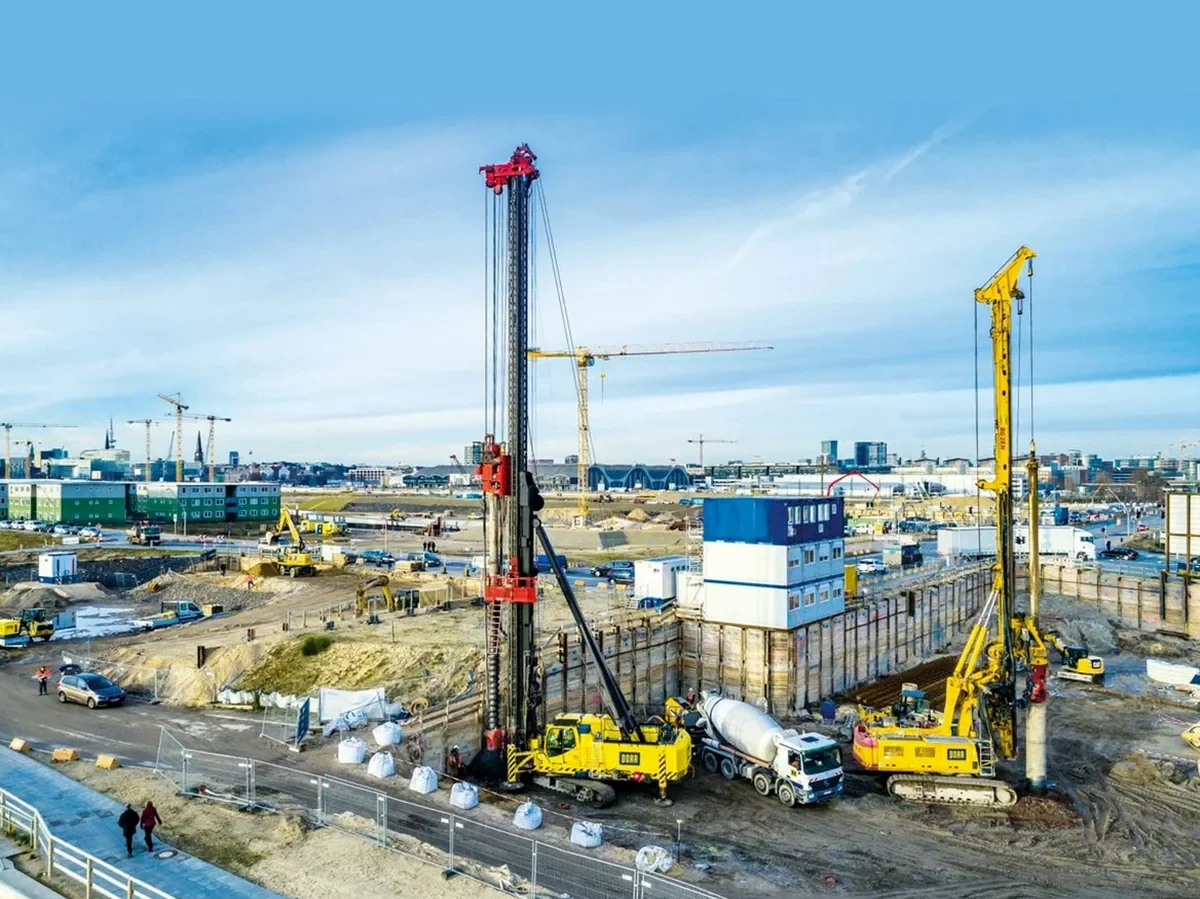
Technical reference image — Wollongong

Site-specific factors

In Wollongong, we often see pile designs where shaft resistance in the upper estuarine clay is overestimated because the soil was tested at its drained strength. The Lake Illawarra clays exhibit significant setup after driving, but also undergo relaxation if pore pressures are not monitored. A static load test on a preliminary pile is the only reliable way to confirm the design assumptions. The other recurring issue is downdrag: when fill is placed over compressible alluvium, the negative skin friction can exceed the structural capacity of slender driven piles. We recommend instrumented test pits near the pile cap to measure actual fill thickness and density, and we apply the neutral plane method from AS 2159 to calculate the resulting axial force redistribution. Overlooking this mechanism on the Dapto floodplain has led to costly remedial underpinning.

Need a geotechnical assessment?

Reply within 24h.

Email: contact@geotechnicalengineering1.co

Reference parameters

ParameterTypical value
Design standardAS 2159-2009 Piling — Design and installation
Pile type coverageDriven (steel/H-pile, precast concrete), bored (CFA, cased), screw piles
Axial capacity methodStatic formula (α/β method for clay, β for sand), end-bearing from UCS/PLI
Lateral analysisp-y curves (Reese & Matlock), Broms method for short piles; LPILE modelling
Shaft resistance inputDirect shear on soil-concrete interface or CPT sleeve friction (fs) correlation
Rock socket designWilliams & Pells method; Rowe & Armitage for soft rock; AS 4678 anchor correlation
Dynamic testingPDA testing (CAPWAP analysis) for driven pile verification
Settlement checkElastic continuum (Poulos & Davis) or t-z curves for layered strata

Associated technical services

01

Geotechnical site investigation for piles

Rotary drilling and SPT with rock coring through Illawarra Coal Measures to define the depth to competent bearing stratum. Includes groundwater monitoring and downhole geophysics.

02

Laboratory testing program

Unconfined compressive strength on rock core, Atterberg limits and direct shear on residual clays, and soil aggressivity testing for pile durability against sulfate attack.

03

Axial and lateral pile analysis

Production of resistance curves using t-z and p-y methods. Group efficiency calculations for pile caps on sloping terrain near the escarpment.

04

Pile installation supervision and testing

Full-time supervision during piling, PDA dynamic testing for driven piles, and static load tests with telltale extensometers to separate shaft and base response.

Applicable standards

AS 2159-2009, AS 4678-2002, AS/NZS 1170.0, 1170.1, 1170.2, AS 1726-2017, AS 4100 (steel piles), AS 3600 (concrete piles)

Quick answers

What pile types work best in Wollongong's coastal geology?

Driven steel H-piles suit the residual sandstone in Bulli and Thirroul, where refusal is reached in the upper 8 metres. For the deeper alluvial profiles around Lake Illawarra and Port Kembla, continuous flight auger (CFA) piles or cased bored piles with a rock socket into Bringelly Shale perform better because they reduce disturbance to the surrounding compressible clay. Screw piles can work for lightly loaded structures on the dune sands along the Bellambi to Corrimal strip, provided they penetrate below the seasonal moisture variation zone.

How is pile capacity verified on site?

We use a combination of static load tests and high-strain dynamic testing. A static test applies incremental load to a trial pile while measuring head settlement and, with telltale rods, the actual shaft-base load distribution. Dynamic testing with a Pile Driving Analyzer (PDA) measures force and velocity during driving, and CAPWAP signal matching extracts the static resistance, shaft distribution, and pile integrity. AS 2159 requires at least one static test per 50 piles or per distinct geological unit encountered on the site.

What does a pile foundation design cost in Wollongong?

For a typical residential or light commercial project in the Wollongong area, a complete pile design package—including a desktop review, site investigation with 2-3 boreholes, laboratory testing, and the final design report with signed AS 2159 compliance—ranges from AU$2,440 to AU$9,730. The final figure depends on the number of piles, the complexity of the geology, and whether dynamic or static load testing is included in the scope.

Do you design pile groups for sloping sites near the Illawarra Escarpment?

Yes. Sloping sites introduce lateral loads from soil creep and downhill thrust, which we model using p-y curves adjusted for the near-surface colluvium. For pile groups on slopes steeper than 1:5, we analyze the reduction in passive wedge resistance and check the structural capacity of the pile under combined axial-flexural loading. The slip circle analysis from our slope stability assessments feeds directly into the pile lateral load envelope to avoid a global failure mechanism cutting through the pile group.
Location and service area

We serve projects in Wollongong and surrounding areas.

View larger map